Chapter 9: The End of Procedure
Read this entry before Class 9: Season 2, Episode 9 “Welcome to the Rebellion”
Chapter 9 — The End of Procedure
Mon Mothma’s Journal
The reports from Ghorman are, in their official form, both precise and deeply insufficient. They describe a contained disturbance, initiated by local insurgents, which necessitated a proportional and regrettable response by Imperial forces. The language is familiar—measured, procedural, and carefully constructed to convey inevitability rather than choice. It is, in many respects, consistent with the manner in which the Senate has been expected to understand such events for years. And yet, I find that I cannot accept it.
This is not the first time I have encountered a discrepancy between the Empire’s account of events and the testimony of those who were present. Such discrepancies have, over time, become easier to rationalize, or at the very least, easier to defer. One learns, in this position, to distinguish between what can be proven, what can be suggested, and what must be left unspoken. It is, I had long believed, the necessary discipline of governance within an imperfect system.
I am no longer certain that this distinction holds.
What has occurred on Ghorman does not present itself as an isolated failure of judgment or an excessive response to local unrest. Rather, it suggests a more fundamental shift in the relationship between the Empire and those it governs. The explanation offered—that violence originated from the population and was met with force—functions less as an account than as a framework within which all subsequent actions are rendered defensible. It is a narrative designed not to persuade those who witnessed events, but to stabilize the understanding of those who did not. This, I now believe, is the more significant development.
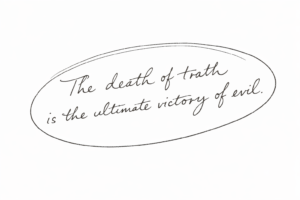
For many years, the Senate has operated under the assumption—however strained—that it retained some capacity to mediate, to question, and, in limited ways, to constrain executive authority. Even as that capacity diminished, the appearance of deliberation remained. Debates were held. Objections were recorded. Procedures were followed. These practices, though increasingly symbolic, allowed for the continued belief that the institutions of governance had not been entirely displaced.
It is becoming increasingly difficult to sustain that belief.
We have, I think, been participating in a system that preserves the outward form of representation while relocating decision-making to spaces that are neither visible nor accountable. The Senate continues to convene, but its role has shifted from that of a governing body to that of a validating one. It does not determine policy; it affirms it. It does not constrain authority; it reflects it. In this sense, the Empire has not abandoned institutional structure—it has repurposed it. The distinction is not trivial.
A system that openly rejects representation can be opposed as such. A system that maintains its appearance while removing its substance is more difficult to confront, because it invites continued participation under the assumption that participation still matters. I have, for many years, operated within that assumption. I have argued, negotiated, and compromised in the belief that these actions, however limited, contributed to the preservation of something worth maintaining.
Ghorman suggests otherwise.
The reported detention of the Senator from Ghorman is particularly clarifying. It is one thing to disregard dissent; it is another to criminalize it within the very institution designed to contain it. If members of the Senate can be removed for objection, then objection itself has ceased to be part of the system. It has been redefined as a threat to it.
This is not erosion.
It is conclusion.
What remains is a structure that resembles a representative body but functions as an extension of concentrated authority. Power, though still distributed in appearance, is increasingly exercised by a narrow and unaccountable circle. The language of unity and stability persists, but it now serves to justify decisions that are neither debated nor meaningfully reviewed.
I find myself reflecting on the premise that guided my early years in public life—that institutions, once established and maintained, possess a certain resilience. That through continued engagement, however constrained, they might endure periods of strain and eventually reassert their intended function. It is a comforting premise, and one that has justified a great deal of patience.
It may also be incorrect.
There is a point at which continued participation ceases to preserve an institution and instead contributes to its imitation. By lending legitimacy to processes that no longer operate as they claim to, one risks reinforcing the very conditions one seeks to resist. This is not a conclusion I arrive at lightly, nor without recognition of the consequences it entails.
To withdraw is to concede the space entirely.
To remain is to validate what that space has become.
I am no longer convinced that these options are meaningfully distinct.
If the events on Ghorman are to be understood as indicative of a broader transformation—and I believe they must be—then the Senate, as it presently functions, cannot serve as an effective site of opposition. It can, however, still serve as a platform. The distinction is limited, but it is not insignificant.
There are moments in which the appearance of deliberation may be used, however briefly, to disrupt the narrative it is intended to reinforce.
Such moments are rare.
They are also finite.
I have served in this body for three decades. I entered it with the conviction that governance, though imperfect, was a process through which stability and accountability might be sustained. I do not regret that belief. I do, however, recognize that the conditions which once made it plausible no longer obtain.
What remains is a final opportunity to speak within a structure that is increasingly intolerant of speech.
I intend to use it.
— M.M.
Key Terms
Hybrid Regimes
Political systems that combine elements of democracy (like elections or legislatures) with authoritarian practices that limit real competition and freedom.
- Star Wars Example: The Empire maintains a Senate for much of its rule, giving the appearance of representation while real power remains with the Emperor.
- Real World Example: Countries like Russia hold elections, but opposition parties face heavy restrictions, making the system only partially democratic.
Pseudo-Democratic Institutions
Institutions that look democratic—such as elections, courts, or legislatures—but are controlled in ways that prevent genuine political competition.
- Star Wars Example: The Imperial Senate exists, but it has little real authority and cannot effectively challenge the Emperor.
- Real World Example: Authoritarian regimes may hold elections where the outcome is heavily manipulated or predetermined.
Democratic Consolidation
The process by which a democracy becomes stable and unlikely to revert back to authoritarian rule.
- Star Wars Example: The Republic failed to fully consolidate its democracy, making it vulnerable to Palpatine’s takeover.
- Real World Example: Countries like Germany and Japan developed strong democratic institutions after World War II, making democratic backsliding less likely.
Oligarchy
A system of rule in which power is concentrated in the hands of a small group of elites rather than broadly distributed among the population.
- Star Wars Example: Key decisions in the Empire are made by a small circle of high-ranking officials and advisors, not the broader population.
- Real World Example: In some countries, a small group of wealthy or politically connected individuals hold disproportionate influence over government decisions.